For decades, supplementary lighting in horticulture has been approached mainly from above. The logic seems obvious: place the fixtures over the crop and increase the amount of light available to the plant.
But there is a problem: light is not distributed evenly within the plant canopy.
As a crop develops a dense leaf mass, the upper leaves intercept much of the radiation. The middle and lower zones receive progressively less light and, with it, their photosynthetic contribution also declines.
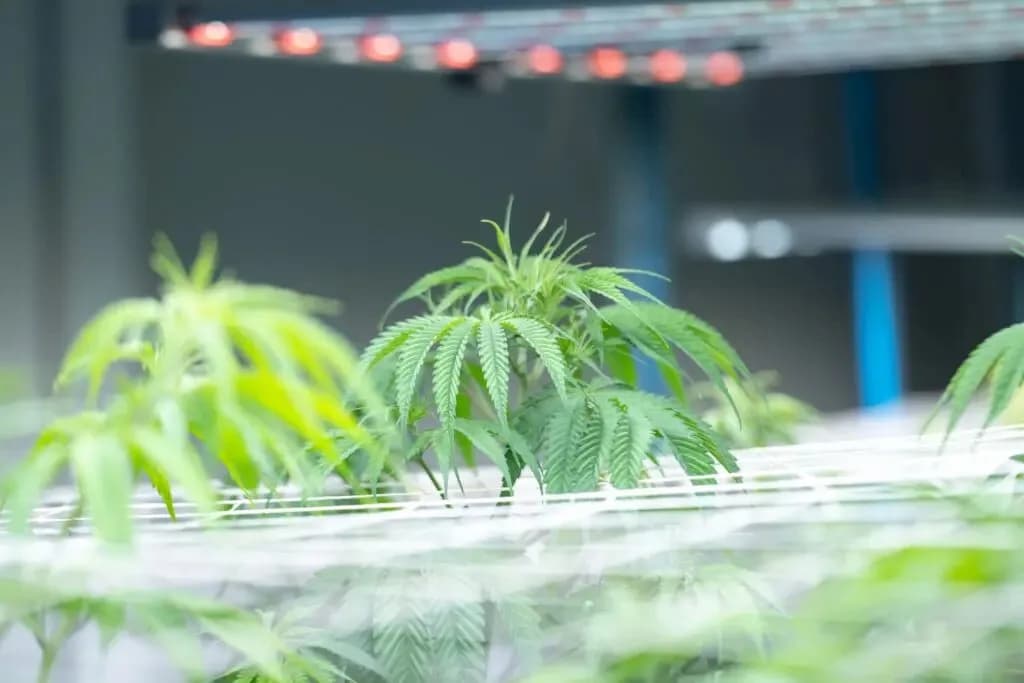
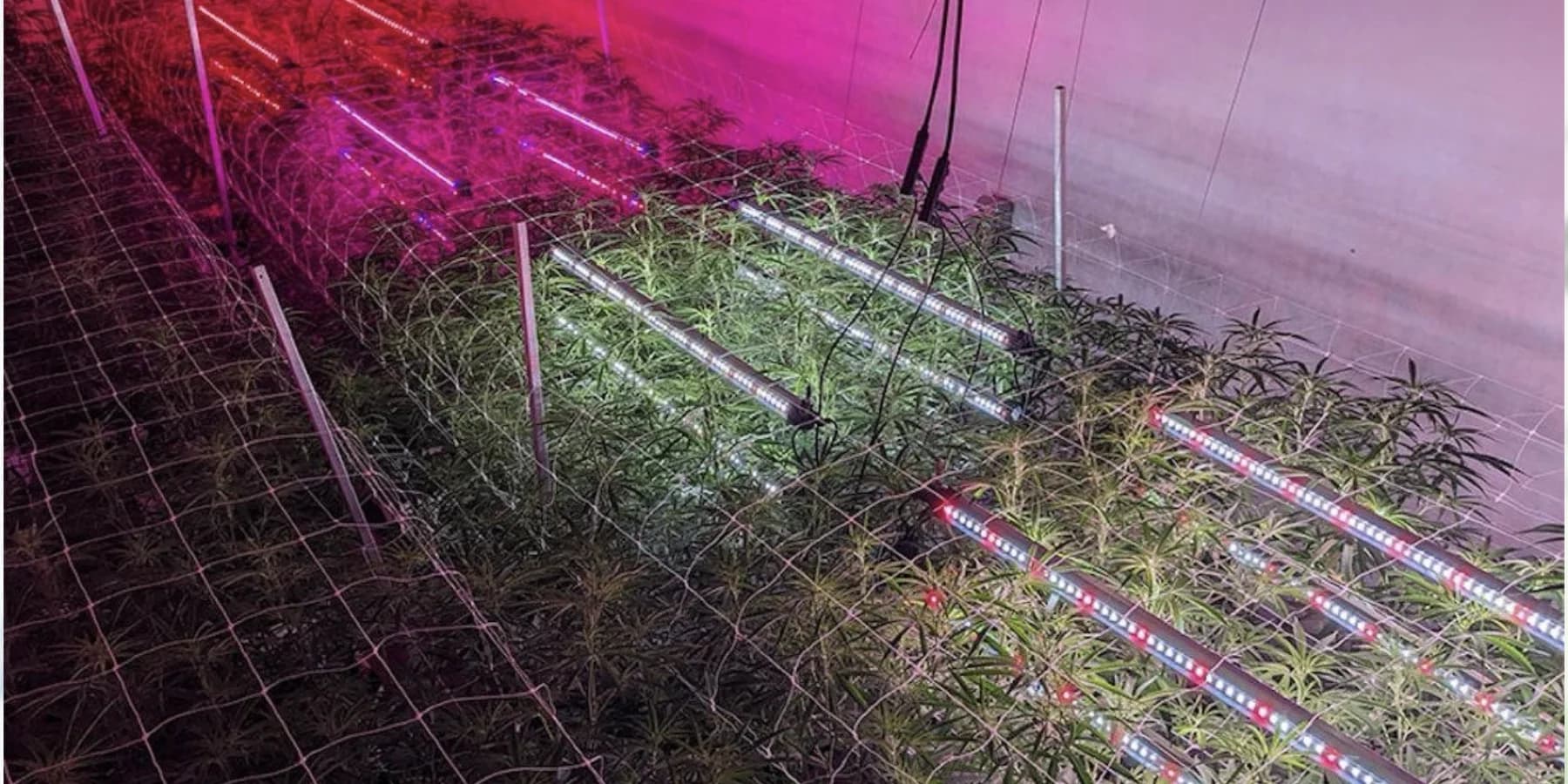
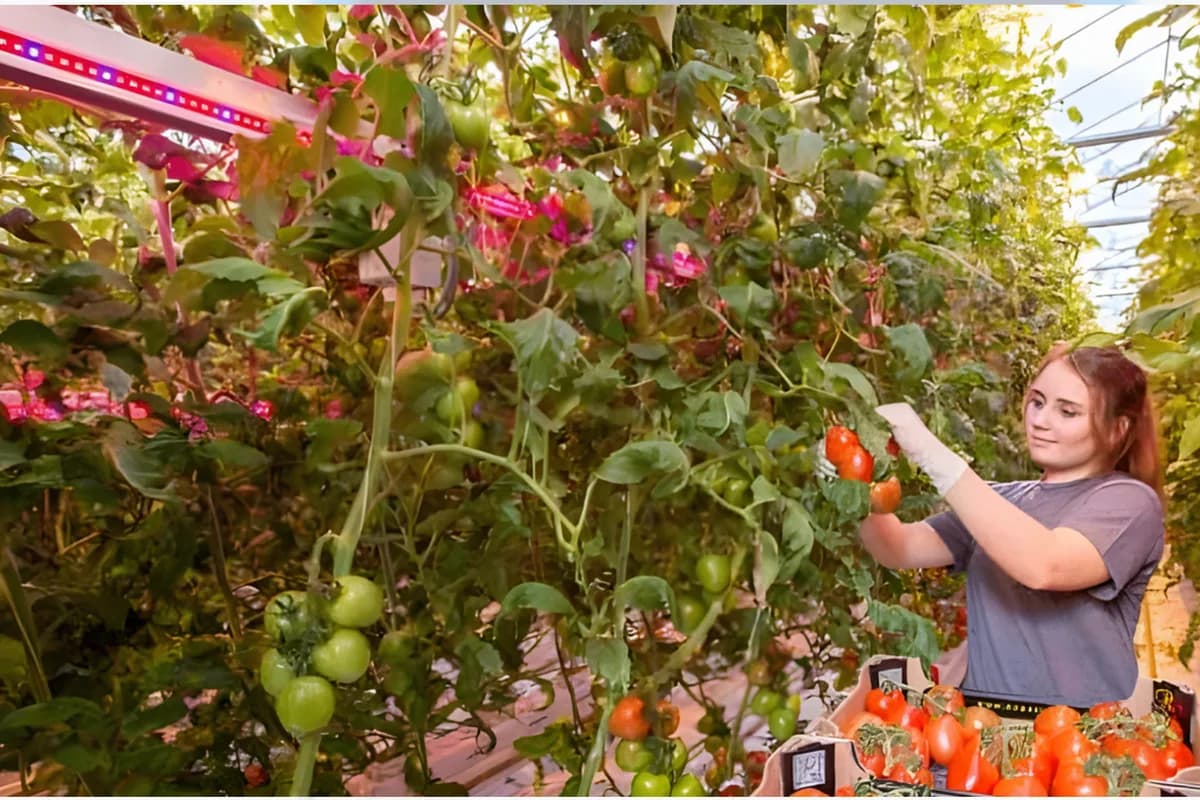
Under-canopy, intercanopy or intracanopy lighting proposes a different strategy: placing LED fixtures below or directly inside the canopy to bring photons where overhead lighting struggles to reach.
The question is whether this redistribution of light really produces a measurable improvement. The research accumulated across crops such as tomato, cucumber, pepper, strawberry and cannabis indicates that it does, though with important caveats.
It is not just about adding more light
One of the most interesting aspects of intracanopy lighting is that it forces a change in how a lighting system is analysed. Two installations can supply similar amounts of light and yet distribute it in completely different ways.
With overhead lighting only, the highest leaves receive a large share of the photons while the lower layers remain partly shaded. Introducing light inside the crop makes it possible to activate a greater leaf area and achieve a potentially more homogeneous vertical distribution of radiation.
The question is therefore no longer only how much light we are generating, but also where we are delivering that light.
Tomato: one of the best-studied crops
Tomato is probably one of the best examples for understanding the potential of this technology. A study published in Scientific Reports in 2024 compared overhead lighting, intracanopy lighting and a combination of both.
The results were particularly significant. Overhead lighting alone increased yield by 12.12%, while intracanopy lighting reached 28.46%. But the highest yield appeared when both strategies were combined: 30.87% more production.

This matters because it indicates that intracanopy lighting does not necessarily have to replace overhead lighting. Both can play complementary roles within the crop.
Quality can change too
The same study found differences that went beyond the kilos produced. The intracanopy treatment increased lycopene content by roughly 31.3%, while the combination of overhead and intracanopy lighting produced a 123.4% increase in vitamin C under the specific conditions of the trial.
This opens up a particularly interesting dimension for horticulture. A lighting strategy should not be assessed solely by its ability to increase harvest weight. It can also influence certain physiological and qualitative characteristics of the product.
The goal, therefore, might not simply be to produce more, but to achieve more production with a given quality and greater homogeneity.
Wageningen studied what actually happens to the photons
Another study from Wageningen University examined precisely how light distribution changes when fixture position is modified. The researchers compared overhead lighting, intracanopy lighting and a combined 50/50 distribution.
The result was revealing. Intracanopy lighting achieved roughly 8% more total light absorption than overhead lighting alone. However, the configuration that produced the most uniform distribution was the combination of both technologies.
The horizontal coefficient of variation was 48% with intracanopy lighting, 43% with overhead lighting and 37% when combining both. The lower this value, the more uniform the distribution.
This reinforces one of the main conclusions that keeps appearing in the research: there is not necessarily a competition between top lighting and intracanopy lighting. Combining the two may be the most interesting strategy.
Not a tomato-only phenomenon
The collected results show similar responses in other crops. In cucumber, models and experimental trials link intracanopy lighting to greater photosynthetic activity in the middle and lower leaves, precisely the zones where natural radiation has the most difficulty penetrating.
In greenhouse-grown pepper, improvements in photosynthetic activity and overall productivity have also been observed when light is introduced within the canopy. And research continues to extend the concept into new production systems.
Strawberry: light distribution and energy efficiency
A 2025 study on vertical strawberry cultivation adds another interesting perspective: increasing production is not enough, what happens to energy consumption must also be examined.
Under the conditions of that experiment, an optimised LED distribution increased fruit weight by approximately 36%, while PPFD uniformity rose from 71% to 85%. At the same time, the system studied reduced energy consumption by roughly 43%.
It is a good example of why lighting design must be analysed as a complete system. Installed power on its own says relatively little. What matters is how many of those photons end up being useful to the plant.
Between 10% and 30%, but there is no universal figure
When different studies and commercial trials are grouped together, a pattern emerges. Documented yield increases typically fall roughly in the 10% to 30% range, although higher results exist under certain experimental conditions.
But it would be wrong to turn these percentages into a commercial promise. The outcome depends on the crop, variety, plant architecture, canopy density, spectrum, PPFD, DLI, fixture position, available solar radiation and management strategy.
Simply claiming that under-canopy lighting increases production by 30% would therefore oversimplify what the studies actually show. The scientifically more interesting conclusion is different: a more efficient vertical distribution of light can increase the crop's capacity to use the photons available.
More intensity does not always mean better results
There is also a physiological limit. If more light were always beneficial, the strategy would be simple: install ever more power. But plants have limits.
Excessive intensity can cause stress and forfeit part of the intended benefits. The collected documentation also notes specific risks observed in certain crops and configurations when excessive intensities are used.
The goal of under-canopy lighting should therefore not be to flood the lower part of the plant with light. It should be to balance the light environment across the canopy as a whole.
LED made this strategy possible
Intracanopy lighting is not merely a new way of positioning a fixture. Its development is closely tied to the evolution of LED technology.
Introducing light sources among leaves, stems and fruit requires compact fixtures with a manageable thermal load. With earlier technologies, placing a light source so close to plant tissue could create significant temperature problems.
LED technology makes it possible to design linear fixtures and distribute them at different levels of the crop with far more flexibility. This has turned lighting into a three-dimensional tool: we no longer necessarily have a single layer of light above the plants, but can design a light environment around the plant.
The next step: measuring production per unit of energy
From a professional standpoint, this is probably the most important question. A system that increases production by 20% but consumes 30% more energy may be less attractive than one that increases production by 15% using practically the same energy.
Assessing intracanopy lighting should therefore include indicators such as:
kg produced per m²
marketable kg per kWh
production uniformity
product quality
energy cost
return on investment
A commercial tomato trial included in the documentation recorded 98 kg/m² versus 83.7 kg/m² for the control, roughly 17% more production. The economic analysis reported by the trial remained positive after accounting for the additional electricity cost.
It is precisely this kind of analysis that will determine when the technology makes commercial sense.
Lighting the plant, not just the roof of the crop
Horticultural lighting has spent years advancing in efficiency: more µmol/J, better spectra, better optics and greater control. Intracanopy lighting adds a new variable to this evolution: the architecture of light.
The available studies show that introducing light within the canopy can increase light absorption, activate traditionally shaded photosynthetic zones, improve uniformity and, under certain conditions, significantly increase production.
But the most interesting conclusion is probably simpler still. Until now we have devoted much effort to building fixtures capable of generating more photons. The next step may be learning to place each photon where the plant can actually use it.
Key scientific references
Ziaei, N. et al. (2024). Intra-canopy LED lighting outperformed top LED lighting in improving tomato yield and expression of the genes responsible for lycopene, phytoene and vitamin C synthesis. Scientific Reports.
Schipper, R. et al. (2023). Consequences of intra-canopy and top LED lighting for uniformity of light distribution in a tomato crop. Frontiers in Plant Science.
Zou, J. et al. (2025). A Low-Energy Lighting Strategy for High-Yield Strawberry Cultivation Under Controlled Environments. Agronomy.
Research on intracanopy lighting in cucumber and pepper, together with technical documentation from the horticultural sector, has also been taken into account.